Optoelectronics Basics #01
What Is Optoelectronics? From Phone Screens to Space Telescopes
What did you do this morning?
Perhaps you glanced at your phone for the time, unlocked it with your fingerprint or face, took a photo of your breakfast, or walked through a metro gate.
Every one of these actions used optoelectronic technology.
But what is optoelectronics? Many people hear the word and think "difficult", "specialist" or "nothing to do with me". In fact, optoelectronics is one of the most widespread and most essential technologies of modern life. From the phone in your pocket to the James Webb Space Telescope operating about 1.5 million kilometers away, everything is built on the same scientific foundation.
In this article, we introduce this world-changing field in the most everyday language we can.
1. A definition: where three fields meet
Literally, "optoelectronics" combines optics and electronics; but to build a system that works, a third field is needed, and what the industry calls "opto-mechatronic integration" refers to all three:
- Optics: the study of how light behaves, how it refracts, reflects, diffracts and interferes
- Electronics: the study of the motion and control of electrons, the basis of modern circuits
- Precision mechanics: making sure optical components and electronic systems can be assembled, positioned and operated precisely
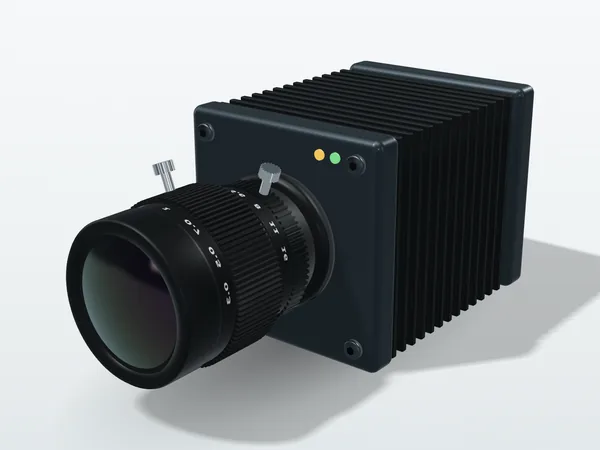
When the three are integrated, the result is an optoelectronic system. A camera is the best example: the lens is optics, the image sensor (CMOS) is electronics, and the shutter mechanism is precision mechanics. None of the three can be left out.
2. How many times did you use optoelectronics today?
Let us count how much optoelectronic technology an ordinary office worker in Taiwan comes into contact with in a day:
- 07:00 | Phone screen lights up → OLED display, where every pixel is a tiny optoelectronic device
- 07:15 | Face unlock → infrared sensor + optical dot projection
- 08:00 | Entering the metro → infrared through-beam sensors at the gate detect whether you have passed (incidentally, the RFID used for tapping your card works with radio-frequency waves and does not count as optoelectronics, which usually covers the ultraviolet, visible and infrared range)
- 09:00 | Video meeting → fiber-optic network transmission, with a camera lens capturing the image
- 12:00 | Scanning barcodes at a supermarket self-checkout → laser scanner
- 18:00 | Switching on the lights at home → LED lighting, using at least 75 % less electricity than incandescent bulbs
- 21:00 | Streaming a series → liquid crystal display (LCD) + backlight module
That is only a slice of daily life. In high-precision industries such as medicine, defense, aerospace and semiconductor manufacturing, optoelectronics is everywhere; you just usually do not see it, because it is hidden inside the machines.
3. Taiwan's place in the global optoelectronics landscape
Taiwan holds a substantial share of the global optoelectronics supply chain, and this has to do with its industrial structure.
Semiconductor processing, panels and displays, and precision machining all have sizeable clusters in Taiwan, and they are geographically close together. Optoelectronic systems need all three at once, so for integration work in Taiwan, communication between factories and the prototyping cycle are usually shorter than with a supply chain spread across several countries.
According to the Photonics Industry and Technology Development Association (PIDA), the total output of Taiwan's optoelectronics industry in 2024 was about NT$1.56 trillion. In segments such as optical lenses, LED packaging and fiber-optic components, Taiwanese manufacturers have long been part of the international supply chain.
Source: Photonics Industry and Technology Development Association (PIDA), published May 2025. PIDA's statistical scope is adjusted from year to year, so figures from different years should not be compared directly; for the latest data, refer to PIDA's official publications.
4. Five main application areas of optoelectronics
Optoelectronics is applied far more widely than we might imagine. The following five areas are currently the most representative:
1. Precision metrology and quality inspection
In high-precision industries such as semiconductors, aerospace and medical devices, many measurements are beyond the ability of the naked eye and contact gauges. Laser interferometers and white-light interferometric profilers reach nanometer-level resolution (0.000001 mm) without contact; optical coherence tomography (OCT) can see inside translucent materials and biological tissue with micrometer-level resolution.
2. Medical optoelectronics
Laser eye surgery for myopia, fundus photography, endoscopes, surgical microscopes, low-level laser therapy: modern medicine relies heavily on optoelectronics. Because light is contactless and precise, many diagnoses can be made without cutting the body open, and treatment can be less invasive and more precise.
3. Optical communication
Behind the smooth online video you watch is a fiber-optic network laid across the world's seabeds. Optical fiber uses total internal reflection to carry light through glass fibers; it is fast, low-loss and immune to electromagnetic interference, the backbone of modern network infrastructure.
4. Environmental sensing and autonomous driving
LiDAR is one of the sensors used in many autonomous driving systems. It emits laser light and receives the reflected signal, generating a three-dimensional point cloud of the surroundings many times per second, with range accuracy at the centimeter level.
5. Non-destructive testing (NDT)
Aircraft wings, nuclear plant piping, bridge structures: these cannot be taken apart for inspection, yet they must be confirmed free of cracks and defects. Optical non-destructive testing techniques, including infrared thermography, laser ultrasonics and digital image correlation (DIC), let engineers inspect surface and near-surface defects and deformation without damaging the structure. Further reading: Non-Destructive Testing: Seeing Inside Without Taking It Apart.
5. What does PO Tech Studio do?
PO Tech Studio is a precision optoelectronic system integration studio led by PhD-level engineers.
We position ourselves as a "technical bridge" between pure research institutes and large manufacturers.
- For research institutes: we turn innovative laboratory technology into engineering solutions that can be produced and commercialized
- For small and medium-sized companies: we provide custom optoelectronic system design and technical consulting to help companies upgrade their measurement and inspection capabilities
- For international partners: building on Taiwan's local manufacturing clusters, we provide one-stop service from design to delivery
Our core business covers precision optical instrument design, optoelectronic system integration, industrial automation and motor control, machine vision and non-destructive testing, research and development services, and technical management consulting. The full list is under Services.
Closing: optoelectronics is closer than you think
Optoelectronics is not some distant science-fiction technology; it is infrastructure that keeps modern civilization running. Every photo you take, every video you stream, every time a doctor examines your eyes with an instrument, optoelectronics is quietly at work behind the scenes.
This series has since covered SWIR, optical coatings and lens focal length, while non-destructive testing is part of the Industry Applications series; next we will go deeper into topics such as optical metrology and laser systems. If you are curious about the world of optoelectronics, keep following PO Tech Studio.