
SWIR Cameras
SWIR Cameras
InGaAs sensors covering 0.9–1.7 µm, from a 320×256 camera running above 1 kHz full frame to 1920×1080 high-resolution area arrays, plus a 2048-pixel line-scan camera. All but one 640×512 version have thermoelectric sensor cooling (TEC). Country of origin: overseas (non-PRC).
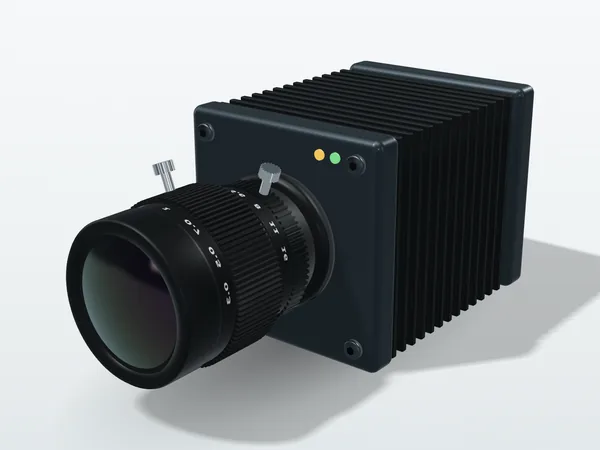
Specifications
| Resolution | Pixel pitch | Sensor area (mm) | Sensor cooling | Response | Interfaces | Full-frame rate |
|---|---|---|---|---|---|---|
| 320×256 | 15 µm | 4.80×3.84 6.1 diagonal | Yes (TEC) | Linear (low read noise) or logarithmic (high dynamic range) | USB3.0, Camera Link Embedded: GigE, Camera Link | USB3.0: 1,000 Hz (high-speed version 1,098 Hz) Camera Link: 890 Hz Embedded: 820 Hz |
| 640×512 | 15 µm | 9.60×7.68 12.3 diagonal | Yes (TEC) | Linear (low read noise) or logarithmic (high dynamic range) | USB3.0, Camera Link Embedded: GigE, Camera Link, HD-SDI, analog (PAL/NTSC) | Non-embedded: 200 Hz Embedded GigE/Camera Link: 260 Hz HD-SDI and analog: per video standard |
| 640×512 | 15 µm | 9.60×7.68 12.3 diagonal | None | Logarithmic (high dynamic range) | USB3.0 | 100 Hz |
| 640×512 | 15 µm | 9.60×7.68 12.3 diagonal | Yes (two-stage TEC) | Linear | USB3.0, Camera Link | 200 Hz |
| 1280×1024 | 10 µm | 12.80×10.24 16.4 diagonal | Yes (TEC) | Linear | USB3.0, Camera Link Embedded: Camera Link, HD-SDI | 60 Hz; 100 Hz with a region of interest of about 1280×614 |
| 1920×1080 | 8 µm | 15.36×8.64 17.6 diagonal | Yes (TEC) | Linear | USB3.0, Camera Link Embedded Camera Link version planned for 2027 | 60 Hz; 100 Hz with a region of interest of about 1280×614 |
| 2048×1 (line scan) | 8 × 15 µm | — | Yes (TEC) | Linear | Embedded: Camera Link | Line rate 110 kHz |
Sensor area is calculated from resolution and pixel pitch. Embedded versions output through standard protocols such as GenICam, GigE Vision, analog video or SDI; the other versions capture images through the supplied SDK (C++/Python). Once a specification is chosen, we can provide the datasheet, 3D model and SDK.
Applications
- Wafers and solar cells: silicon becomes increasingly transparent above 1.1 µm, revealing internal cracks and defects
- Welding and hot glass: scenes with extreme brightness differences, suited to logarithmic (high dynamic range) response
- Sorting and moisture: plastic sorting, and moisture detection from water absorption around 1.4–1.5 µm
- Lasers: viewing 1064 nm and 1550 nm spots, beam alignment, and alignment tracking for free-space optical communication
- Long-range observation: sees farther than visible-light cameras through fog, haze, smoke and dust
How SWIR differs from visible and thermal imaging is explained in our article What can SWIR see? and the infrared band reference table.
How to choose
- For fine detail: 1280×1024 or 1920×1080. For fast events: 320×256, with full-frame rates above 1 kHz
- Scenes with large brightness differences: logarithmic response. Weak signals or measurement work: linear response with sensor cooling
- Continuously moving parts or web material: the line-scan camera
- Connecting to an existing capture system: confirm the interface and protocol first (USB3.0, Camera Link, GigE, HD-SDI, analog)
Related products
Original illustration, not a product photo. Actual appearance varies by model.
Not sure which resolution and interface you need?
Tell us about the object, the field of view and your existing capture system; we will suggest a specification before quoting.